
RECOMMENDATIONS, DOWNLOAD THE APP



The campaign “Doing more does not mean doing better – CHOOSING WISELY ITALY”
It aims to help physicians, other health professionals, patients and citizens engage in conversations about tests, treatments and procedures at risk of inappropriateness in Italy, to arrive at informed and shared choices.
The campaign is based on the responsibility of physicians and other health professionals and on the participation of patients and citizens

RECOMMENDATIONS
Tests, treatments and procedures at risk of inappropriateness in Italy that physicians, other health professionals, patients and citizens should talk about.

SOCIETIES
Italian Scientific Societies and Professional Associations that have defined the recommendations

CITIZENS
Section for patients and citizens

YOUTH CWIt
Choosing Wisely Italy for students and physicians in training
NEWS FROM THE WORLD

Choosing Wisely International Roundtable in Florence
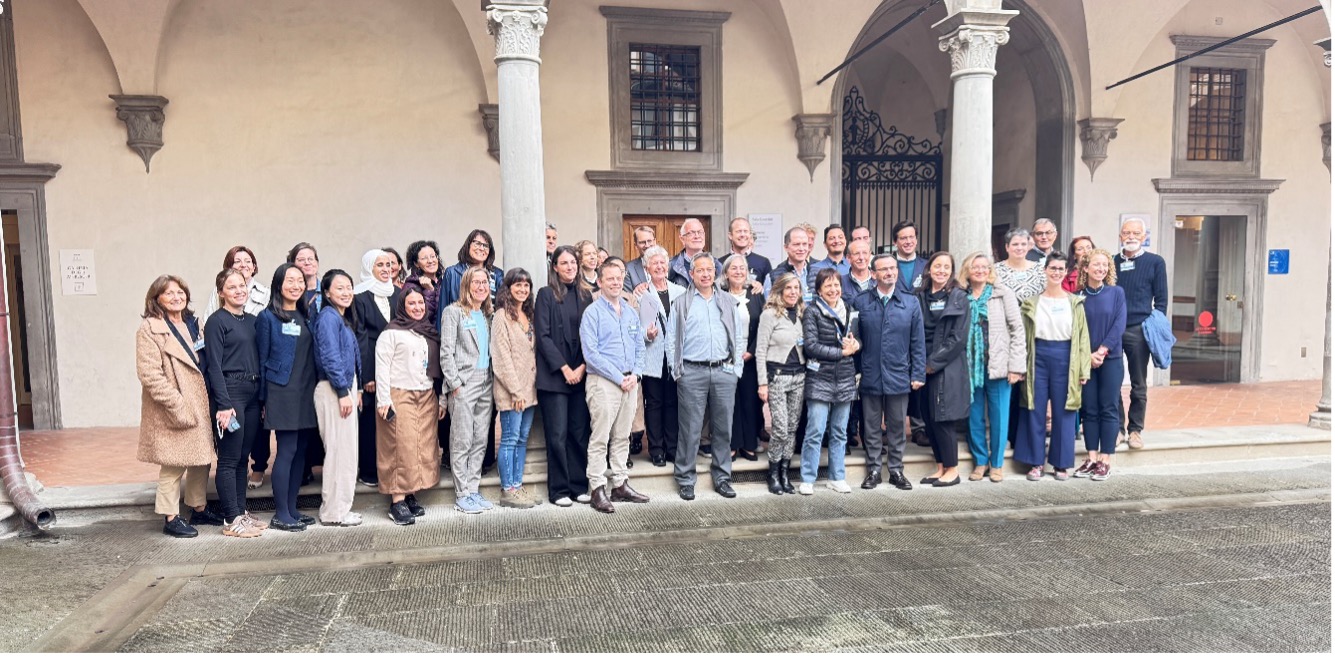 The 2025 Choosing Wisely International Roundtable was held in Florence at the Spedale degli Innocenti on October 21 and 22, thanks to the collaboration between Choosing Wisely Canada, Slow Medicine ETS/Choosing Wisely Italy, and the Tuscany Regional Health Agency. It also enjoyed the support of the professional societies Italian Association of Dietetics and Clinical Nutrition – ADI, Italian Association of Hospital Gastroenterologists – AIGO, National Association of Nurses for the Prevention of Hospital Infections – ANIPIO, Italian Federation of Associations of Hospital Internal Medicine – FADOI, and Italian Society for Clinical Pathology and Laboratory Medicine – SIPMeL, which participated in the meeting, as well as the National Federation of Medical Doctors’ and Dentists’ Orders – FNOMCeO.
This was the annual meeting of the Choosing Wisely International network, attended by delegates from 20 countries: Italy and Canada, as well as Australia, Austria, Belgium, China, Colombia, Czech Republic, Denmark, France, Norway, the Netherlands, Portugal, Singapore, Spain, Sweden, Switzerland, Trinidad & Tobago, and the USA, and representatives of the OECD.
Choosing Wisely International is leading the transformation of healthcare worldwide, committing to reducing unnecessary and harmful care, promoting responsible use of resources, and improving outcomes for patients, communities, and the planet.
The meeting’s topics proved to be of great interest, particularly the role of healthcare professionals in addressing climate change, with the “Climate Conscious” recommendations from Choosing Wisely Canada and the “Green” recommendations from Choosing Wisely Italy.
The Handbook for greener Healthcare Services, developed in Bergamo, was also presented.
Elina Suzuki of the OECD presented the very recent document “Decarbonizing Health Systems Across OECD Countries,” which she co-authored. The document emphasizes, among other things, the importance of reducing healthcare system emissions by reducing low-value care (a win-win-win choice) and cites the Choosing Wisely campaigns. Her presentation, along with Niek Klazinga of the OECD too, also addressed the topic of measuring low-value practices.
Another important topic was the techniques and experiences of de-implementing unnecessary practices, i.e., applying the Choosing Wisely recommendations. The workshops were supported by Jeremy Grimshaw of Canada, author of the de-implementation framework. The de-implementation experience underway in the Tuscany Region through the Regional Health Agency project, which has already produced interesting results, was presented.
Wendy Levinson, chair of Choosing Wisely Canada and International, presented a document outlining the future of Choosing Wisely International, including a role in training professionals worldwide and supporting all countries in de-implementing unnecessary practices.
The support of an international network appears essential to encourage doctors and patients to “choose wisely” for truly necessary and useful diagnostic tests and treatments, avoiding those that are superfluous or even harmful. The development of Value-Based Medicine could benefit citizens’ health, the sustainability of healthcare systems, and the environment.

Choosing Wisely International Roundtable in Barcelona
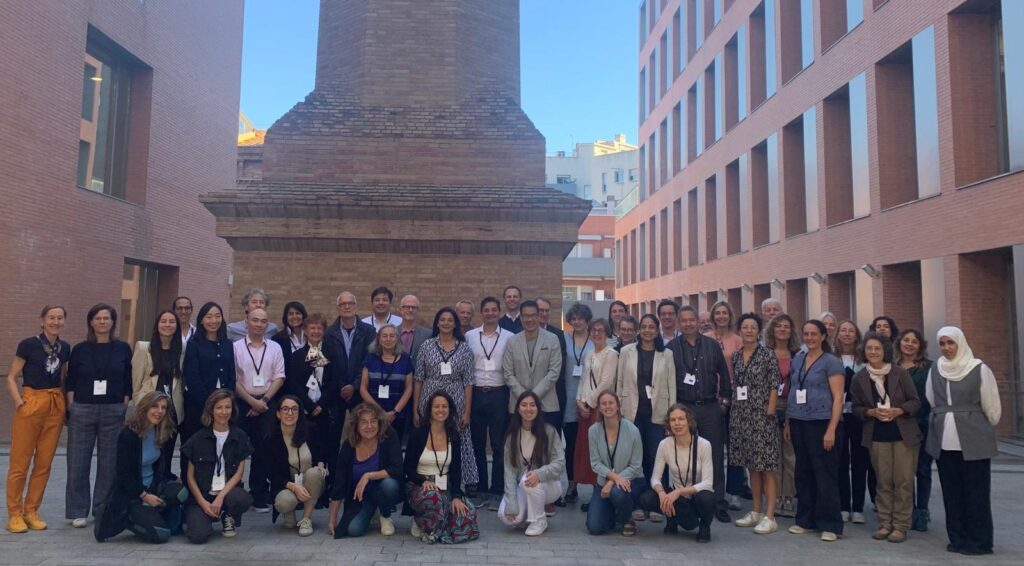
Choosing Wisely International Roundtable 2024 took place in Barcelona on 9 and 10 October, coordinated by Canada and attended by representatives from more than 20 countries around the world.
The international meeting was attended by Sandra Vernero, Marika Werren (Slow Medicine/Choosing Wisely Italy), Paolo Francesconi (Regional Health Agency of Tuscany) and Chiara Marini (University of Florence) for Italy.
 Sandra Vernero gave a presentation entitled Climate Sustainability Work in Choosing Wisely Italy, which addressed the issues of Green Choosing Wisely and green recommendations and illustrated the Italian project to raise awareness among professionals and citizens about the damage caused by plastic and to reduce its use in the healthcare sector as well as the project of the city of Bergamo to improve environmental sustainability.
Chiara Marini presented the de-implementation project of the Regional Health Agency of Tuscany, coordinated by Paolo Francesconi, aimed at reducing unnecessary prescriptions of health services.
The following topics were discussed in the meeting.
• Climate sustainability and appropriateness of care
• Research on de-implementation: state of the art and future prospects
• Approaches to promote patient involvement
Dedicated sessions were organized for each topic, in which the projects and initiatives promoted by the various countries were presented and working groups were organized to explore new ideas, analyze opportunities and reflect on the critical issues to be addressed.

Multinational survey on low value care among primary care physicians
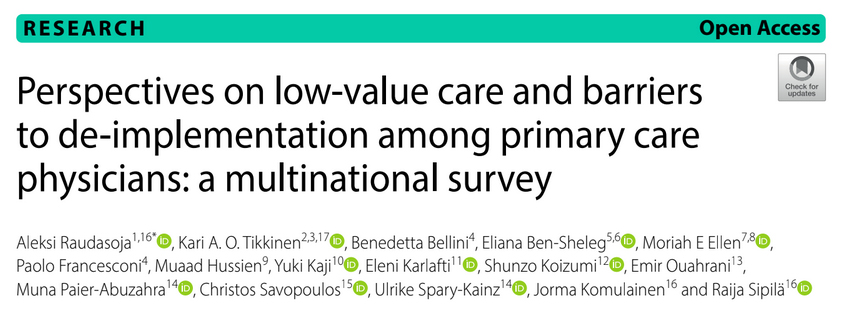
The results of the multinational primary care survey defined within the Choosing Wisely International network, the University of Helsinki and the Finnish Medical Society Duodecim have been published:
Perspectives on low-value care and barriers to de-implementation among primary care physicians: a multinational survey (BMC Primary Care, biomedcentral.com).
The survey, aimed at primary care physicians, intended to explore attitudes towards low-value care and identify the most important barriers to the de-implementation of low-value care use in primary care in high-income countries. It was carried out through an online questionnaire regarding: knowledge of Choosing Wisely recommendations, attitudes towards overdiagnosis and overtreatment, barriers to deimplementation of low value care.
Six high-income countries participated: Austria, Finland, Greece, Italy, Japan and Sweden. Differences have emerged among different countries.
According to the article’s conclusions, more than 80% of primary care physicians consider overtreatment and overdiagnosis as a problem in their country’s healthcare but fewer (around 50%) in their own practice. Lack of time, fear of error, and patient pressures are common barriers to de-implementation in high-income countries and should be acknowledged when planning future healthcare. Due to the wide variety of barriers to de-implementation and differences in their importance in different contexts, understanding local barriers is crucial when planning de-implementation strategies.
For Italy, the Regional Health Agency of Tuscany (ARS) participated with Paolo Francesconi and Benedetta Bellini; Slow Medicine/Choosing Wisely Italy, with Paola Mosconi and Sandra Vernero, contributed to the research.
NEWS FROM ITALY
Handbook for greener Healthcare Services
During the conference held in Bergamo on November 16th on the climate emergency and its implications for health, the Handbook for greener Healthcare Services was presented.
It will be introduced at the Choosing Wisely International Roundtable 2025 to be held in Florence on October 21st and 22nd, 2025.
This practical tool aims to assist healthcare organizations and professionals who wish to engage in the decarbonization of healthcare services.
The Handbook includes a brief methodological introduction and 12 factsheets covering 12 areas of work, highlighting initiatives that, taking into account the local context, can be undertaken to mitigate the impact of healthcare services on climate change. Appropriateness of care through the implementation of Choosing Wisely recommendations is one of them.
This is the first edition of a work in progress that will benefit from the advice, ideas, and suggestions of all those who commit to implementing it.
The Handbook aims to demonstrate that reducing the carbon footprint of healthcare services is a challenging but possible undertaking.
However, we need to realize that the problem exists, that it affects everyone, including healthcare professionals, and that addressing it requires changing many common behaviors, collecting data, promoting meetings, training staff, and much more. Of course, financial investment is also necessary, but it’s primarily a cultural issue. Many interventions don’t require significant investment; they can even reduce costs while simultaneously improving the quality and safety of care.
New recommandations on Green Anesthesia
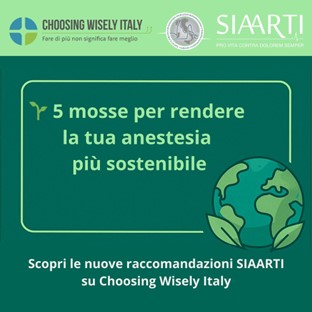
Operating rooms are among the areas of the hospital with the highest environmental impact and Anesthesiologists and Intensive Care physicians with their daily choices can make a decisive contribution to the adoption of more sustainable practices: anaesthetic gases are powerful greenhouse gases and alone contribute to approximately 5% of climate-altering gas emissions from health services.
As part of the Green Choosing Wisely Italy initiative, the Italian Society of Anesthesia, Analgesia, Resuscitation and Intensive Care (SIAARTI) has therefore defined 5 recommendations on Green Anesthesia.
The first recommendation is to not use inhaled anaesthetics with a high global warming potential such as desflurane and nitrous oxide and to replace them with others that are equally effective and less harmful to the environment, or with alternative anaesthetic techniques such as totally intravenous general anesthesia or locoregional anesthesia. Desflurane has a GWP (Global Warming Potential) index that is over 2,500 times that of CO2; the dose needed to keep a patient asleep for an hour is equivalent to a car traveling 320 km.
Subsequent recommendations concern the use of more sustainable anesthesiological techniques, materials and behaviors in the operating room.
Waste management is fundamental, given that operating rooms generate at least 25% of total hospital waste and approximately 25% of this is attributable to anesthesiological practices.
According to the “reduce-reuse-recycle” strategy, it is recommended to reduce the use of disposable materials as much as possible, favoring for example reusable surgical gowns and drapes and reconditionable devices, and to arrange for separate waste collection.
As a final recommendation, the fundamental role of the anesthetist-resuscitator as a protagonist and promoter of sustainable practices in the operating room and in intensive care alongside surgeons and healthcare workers is underlined, with the training support of professional societies.
Alongside SIAARTI in Italy, the World Federation of Societies of Anaesthesiologists in 2022 and the European Society of Anaesthesiology and Intensive Care in 2024 have also addressed the issue of sustainability in anesthesia.
As with the other recommendations, their dissemination and implementation is now essential, together with continuous monitoring of their impact.
“Choosing Wisely Italy: a tool to improve the appropriateness and quality of care” Distance learning course

From Monday 4 March 2024, the new distance learning course of the National Federation of Medical Doctors’ and Dentists’ Orders (FNOMCeO) “Choosing Wisely Italy: a tool to improve the appropriateness and quality of care” is available free of charge for Italian doctors and dentists and provides 10 credits in Continuing Medical Education (CME code 411717).
It will be possible to follow the course until at least 31 December 2024.
The course was created by the Slow Medicine ETS association and the Choosing Wisely Italy campaign to help physicians provide appropriate prescriptions for tests, drugs, other treatments and procedures, in alliance with patients and citizens.
The objective of the course is the dissemination of knowledge on the topics of clinical appropriateness and the overuse of tests, treatments and procedures, on Choosing Wisely, the Choosing Wisely Italy campaign and its Green evolution, as well as on some recommendations of general medical interest.
Interventions that improve clinical appropriateness act positively on several aspects of the quality of care: they increase professionals’ adherence to the best scientific knowledge (practical effectiveness), they decrease adverse events associated with care (safety), they shorten waiting lists (equity, accessibility) and reduce waste of resources (efficiency). Also they improve the doctor-patient relationship (perceived quality) and last but not least they limit greenhouse gas emissions and the impact on the environment resulting from healthcare (ecological footprint).
The course includes 10 video presentations, 5 exercises on 25 daily practice cases and a CME questionnaire that investigates the knowledge acquired.
PARTNERS